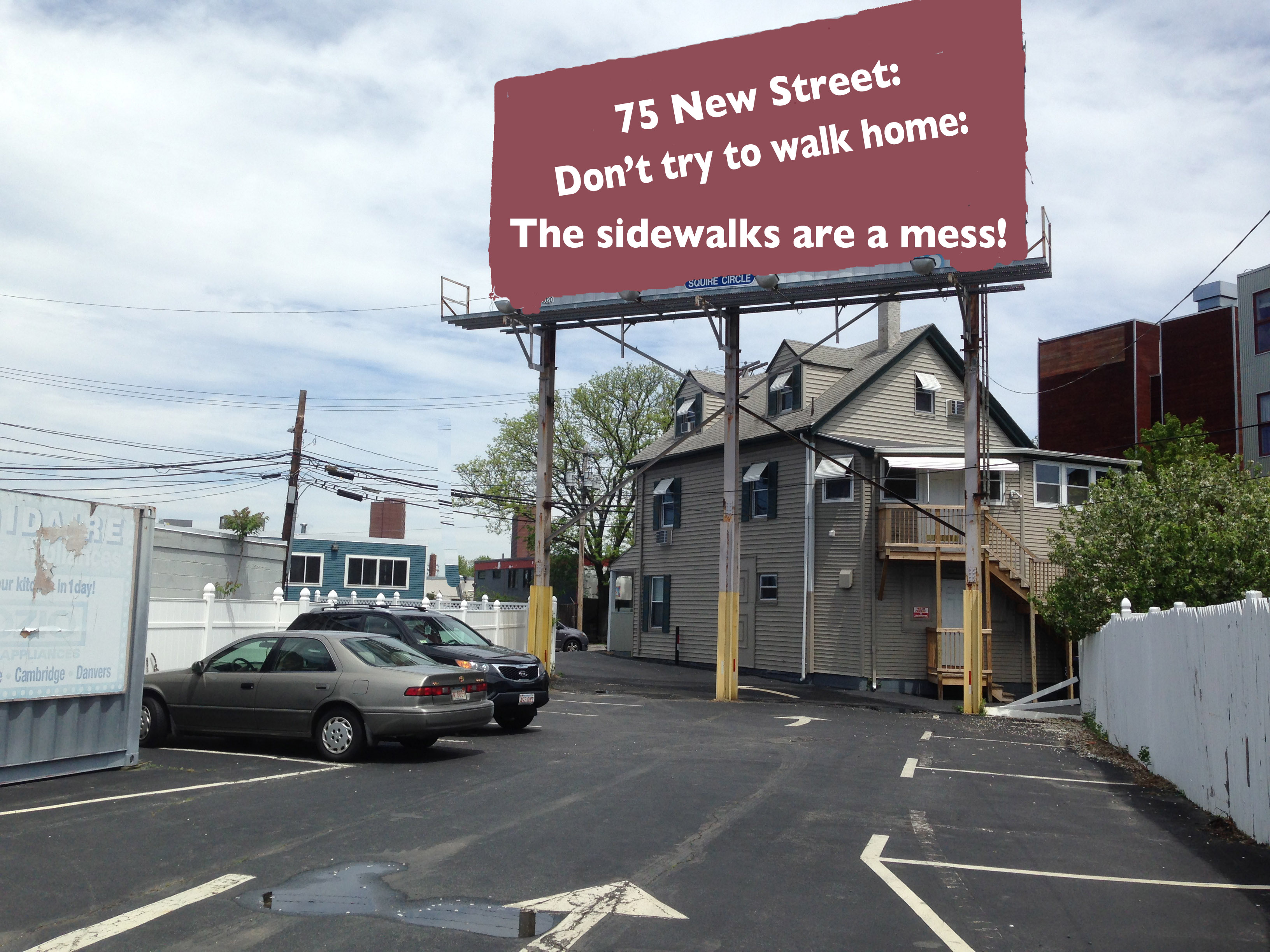
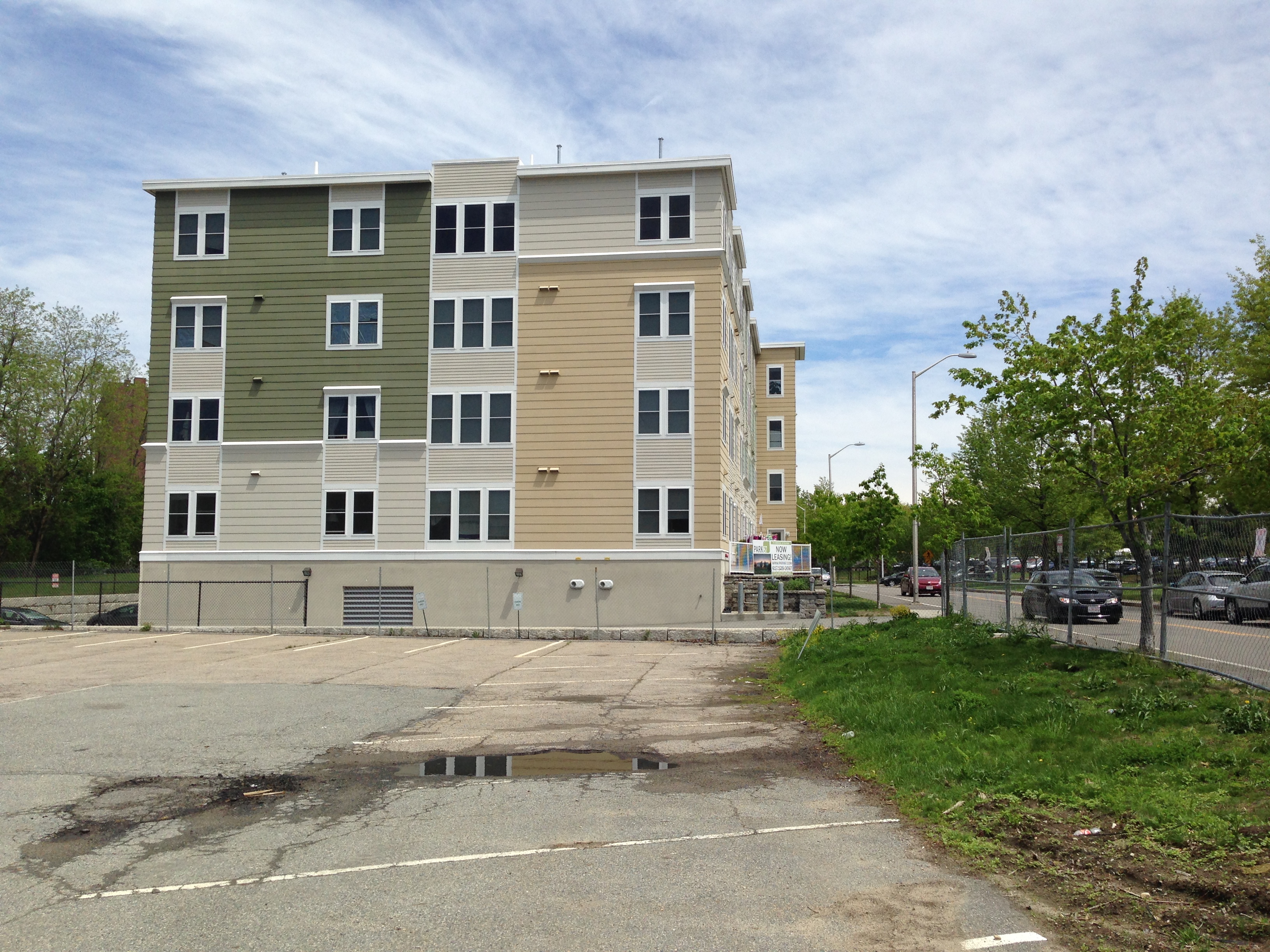
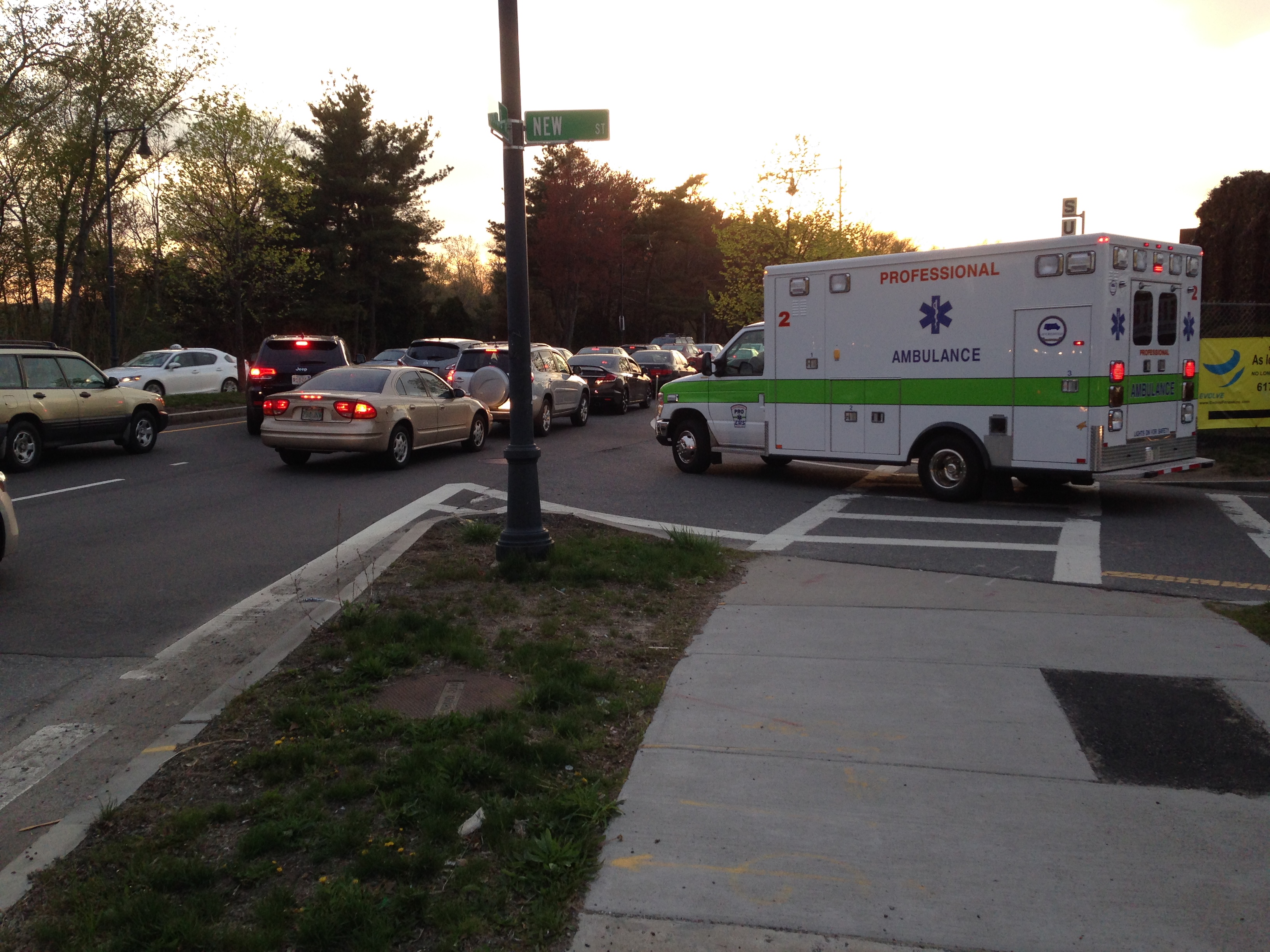
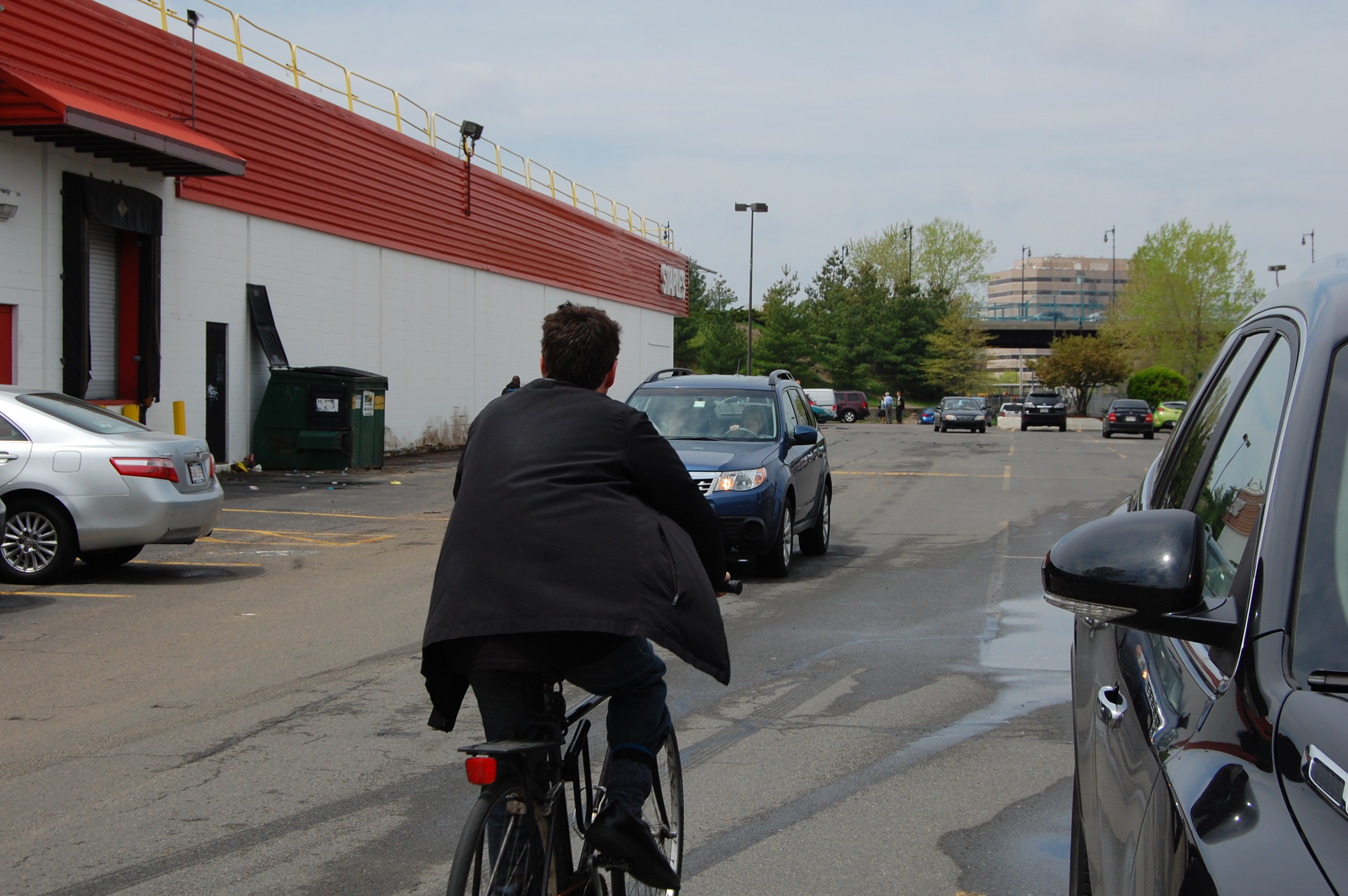
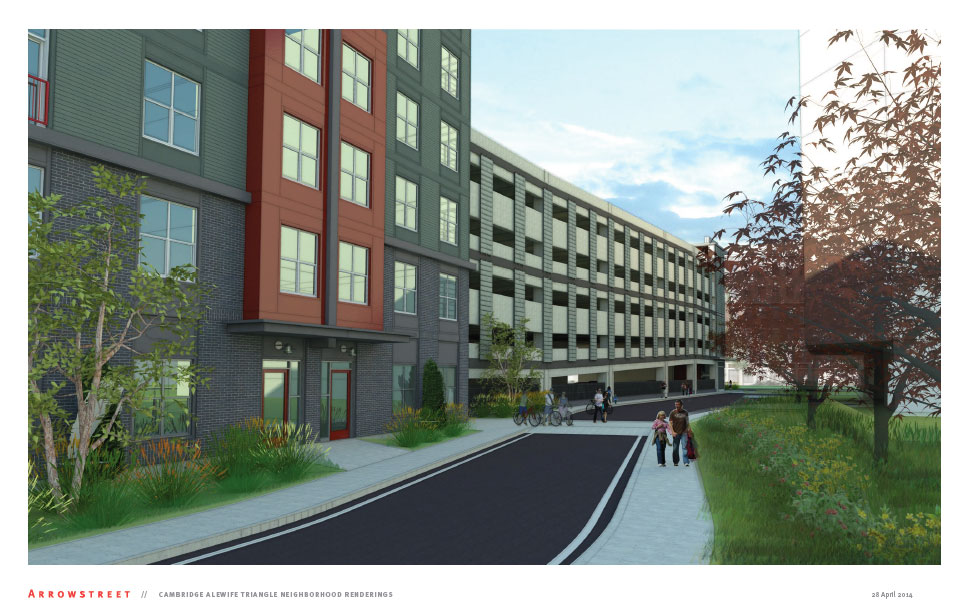
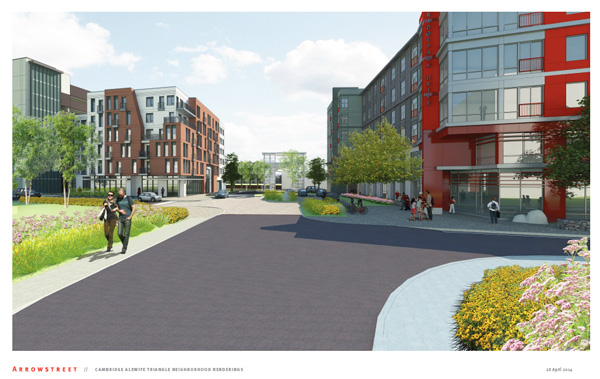
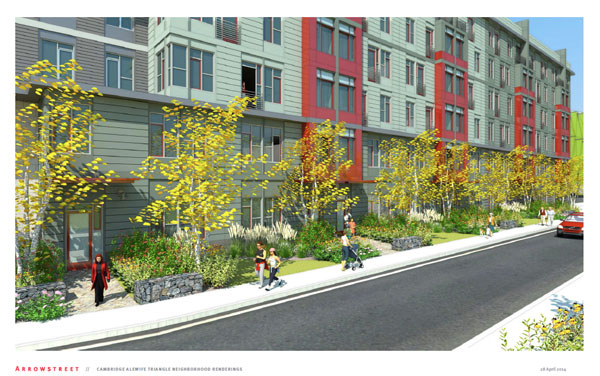
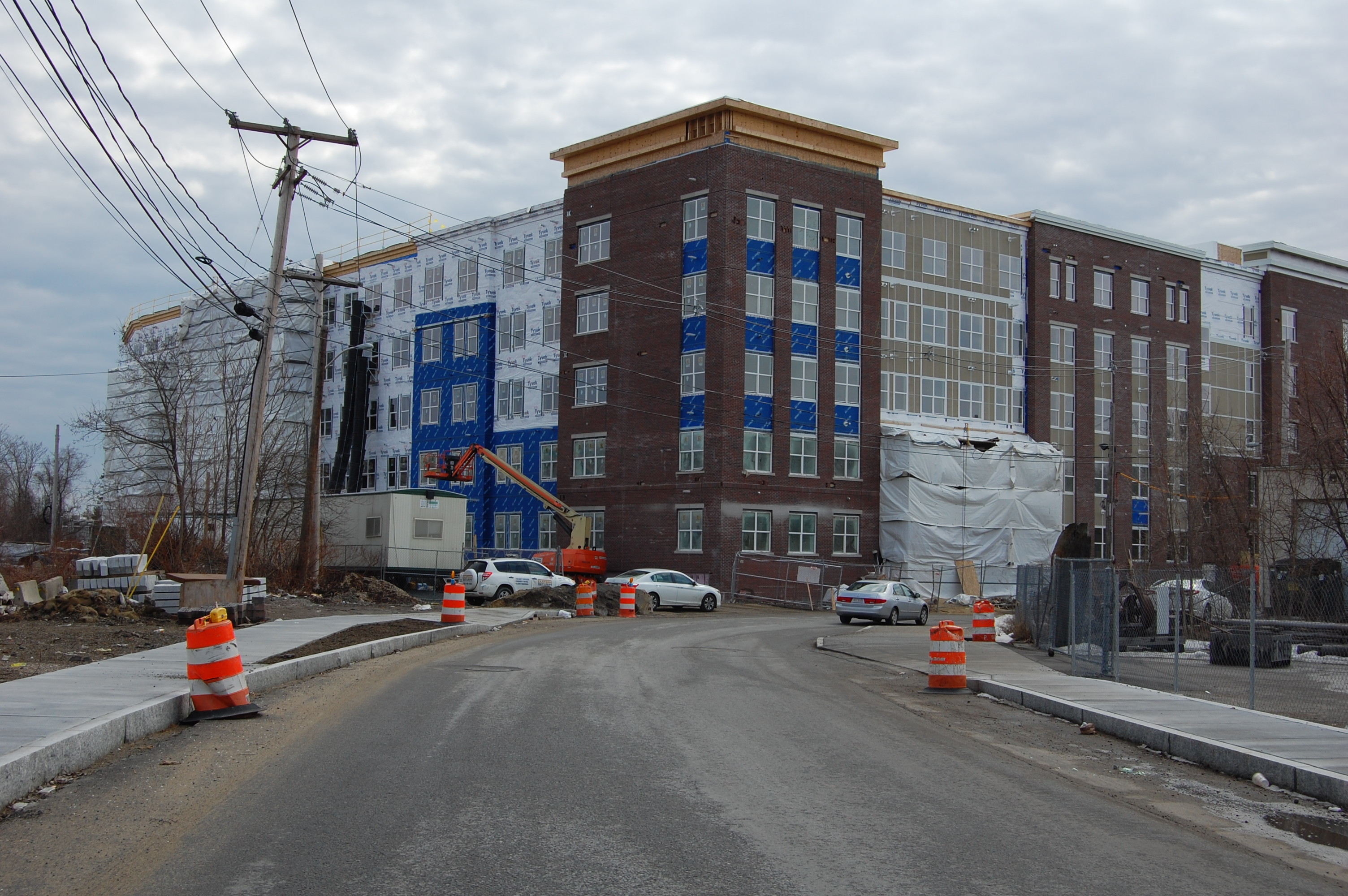
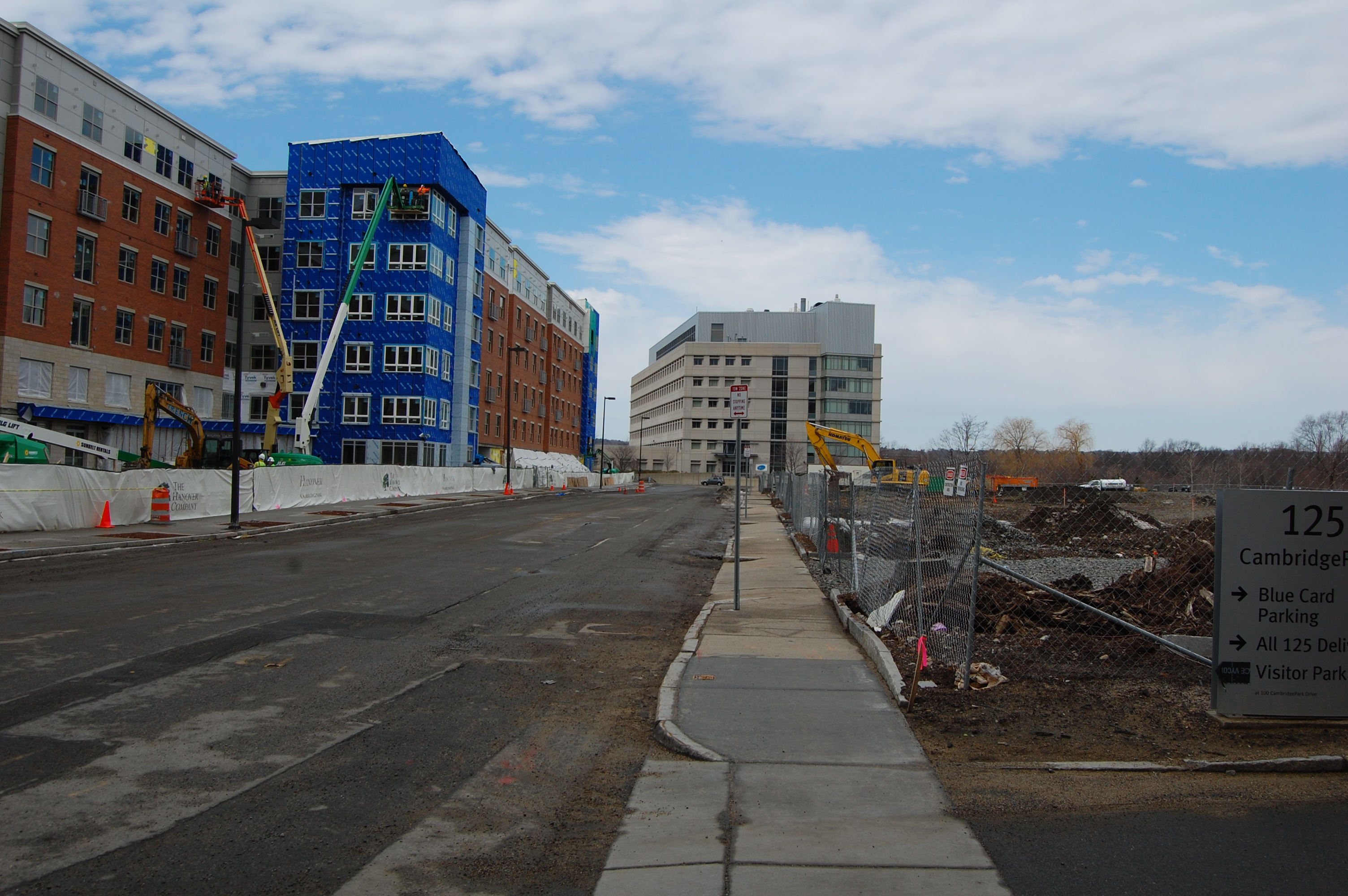
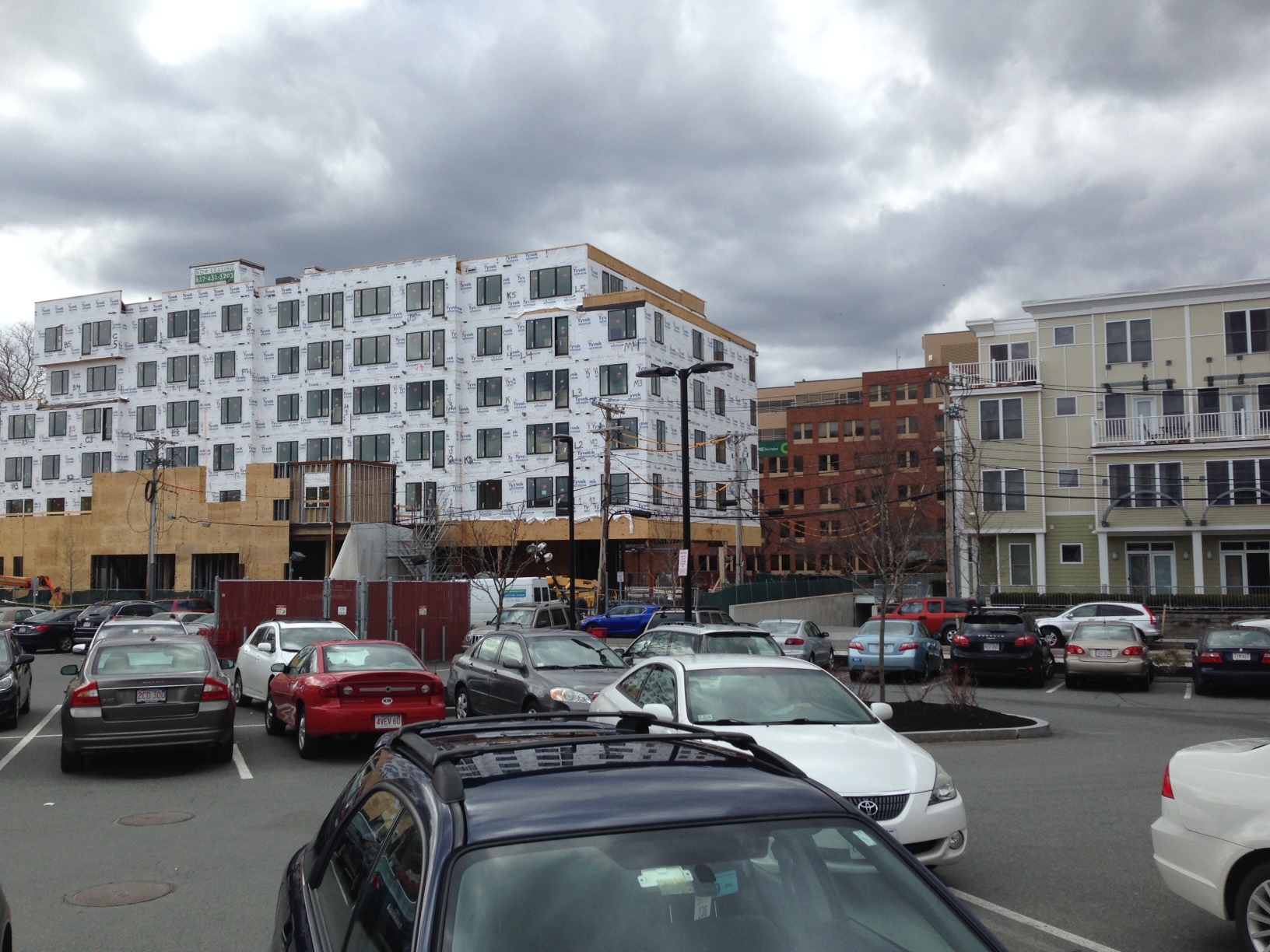
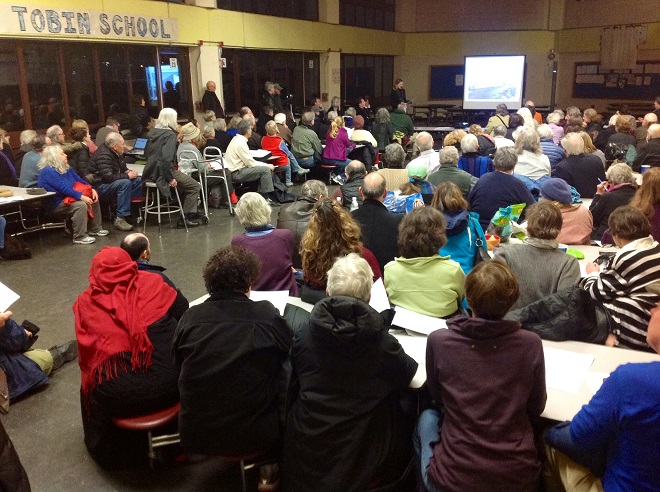
One thing we can say, 75 New Street always draws a crowd. On May 20, a week after the FPRA faithful filled the Tobin cafeteria for a discussion of the project, more chairs had to be added to the second floor room at City Hall Annex to accommodate the members of the public spilling out into the hallway, as the Planning Board resumed its review of a project that has become the “poster child” for ill-conceived development. Continue reading
Author Archives: freshpondresidents
New Street Redux: Hearing May 20th
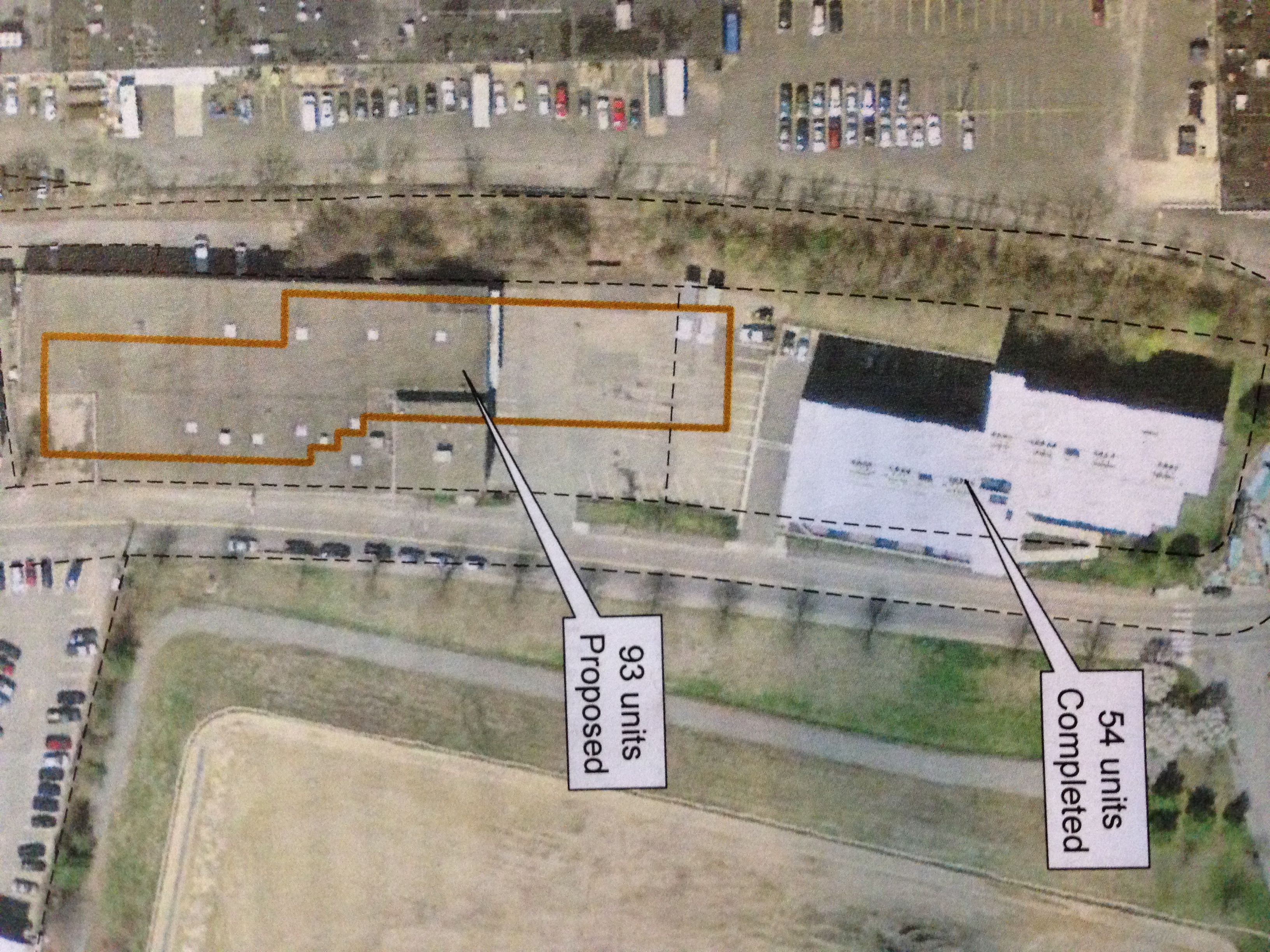
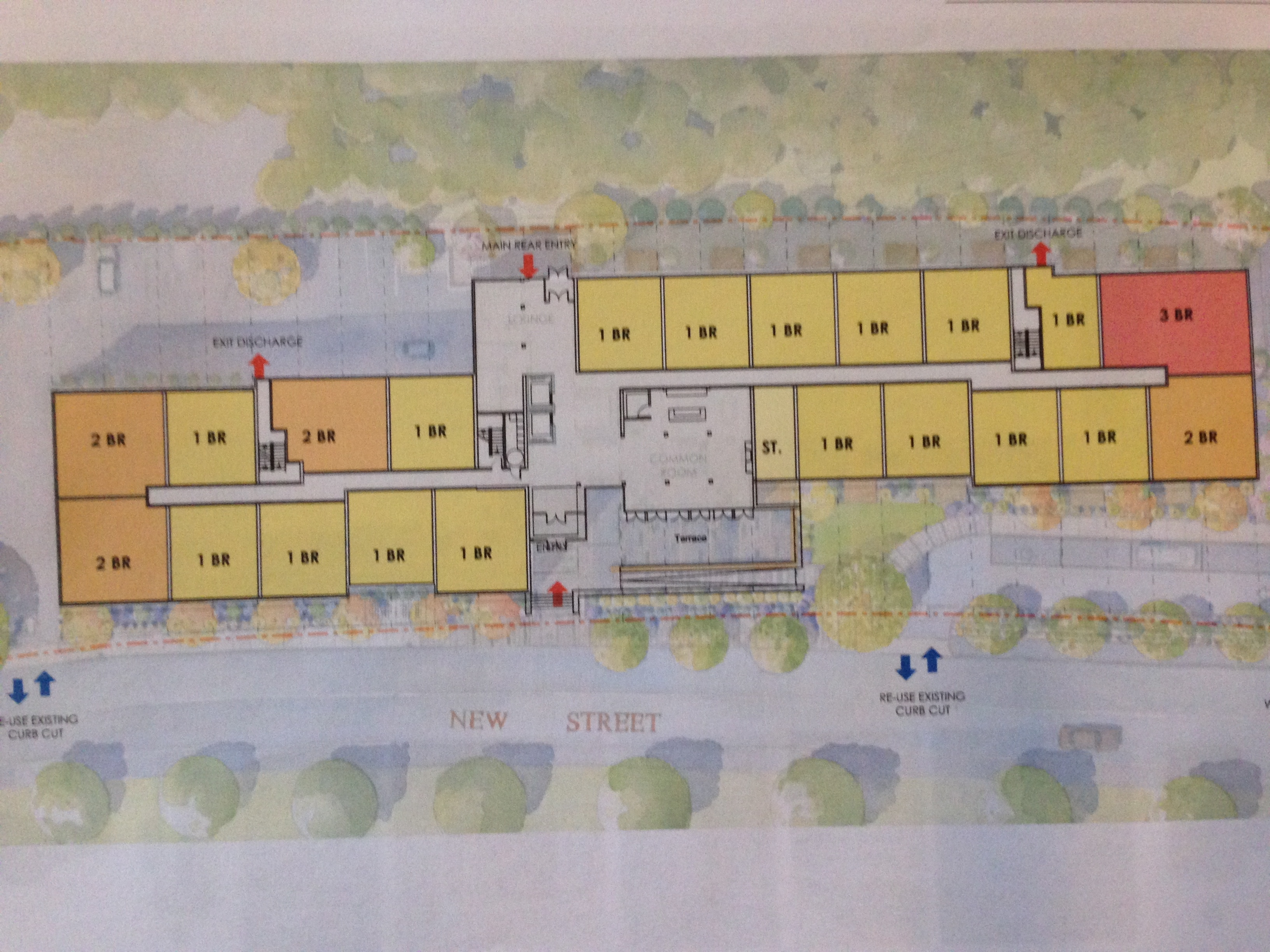
The Cambridge Planning Board will resume its consideration of a proposed 93-unit residential development at 75 New Street at a public hearing on Tuesday, May 20, at 7 pm at City Hall Annex (344 Broadway at Inman St.). Cambridge residents are encouraged to attend the hearing and to comment on the project’s design, either in person or by emailing Liza Paden at lpaden@cambridgema.gov.
The FPRA opposes the design and the developer’s request for special permits to reduce setbacks and allow a change in use from light industrial to high-density residential for the reasons stated in our May 13 letter to the Planning Board. The text of the letter is available online with this petition. Please sign our petition if you agree.
Meeting May 13th, 7 PM: Join Us!
Progress! With the City Council’s unanimous approval of the Carlone-Maher policy order earlier this week, Cambridge is one step closer to developing a new master plan. So what’s next?
The Fresh Pond Residents Alliance will hold a public meeting on Tuesday, May 13, at 7:00 PM at the Tobin School (197 Vassal Lane). All welcome!
City Councilors will be present to update us on the master plan initiative. (Dennis Carlone, Nadeem Mazen and Marc McGovern are confirmed; others may attend as well.) We will discuss how to make the most of the series of community meetings that will take place with an independent consultant over the next two months. We will talk about next steps, goals and strategies. We invite you to share your greatest hopes and concerns for Cambridge as a whole as well as for our area. This is the moment for neighbors and neighborhoods to come together and talk about the big picture — we must capitalize on this opportunity to weigh in on the future of our city.
BUT while we wait for a plan — what’s on the development horizon?
We also will provide updates on the proposed 93-unit development at 75 New Street, which comes before the Planning Board on May 20, on the status of the Tokyo project, and on the proposed 388-unit development at 180R Cambridge Park Drive, which was approved by the Cambridge Conservation Commission and will come before the Planning Board on June 17.
The Great Alewife Disconnect
Alewife Geometry Quiz
Given: the Quad and the Triangle are contiguous shapes.
Given: the Quad and the Triangle do not intersect.
Given: a straight line (or lines) could connect The Quad and the Triangle at various points.
Theorem: Connecting the Quad and the Triangle would dramatically improve circulation, enhance quality of life for residents and commuters, and increase property values in both areas.
Proof: The theorem is true Q.E.D., but planning vision and political will to act are sorely lacking.
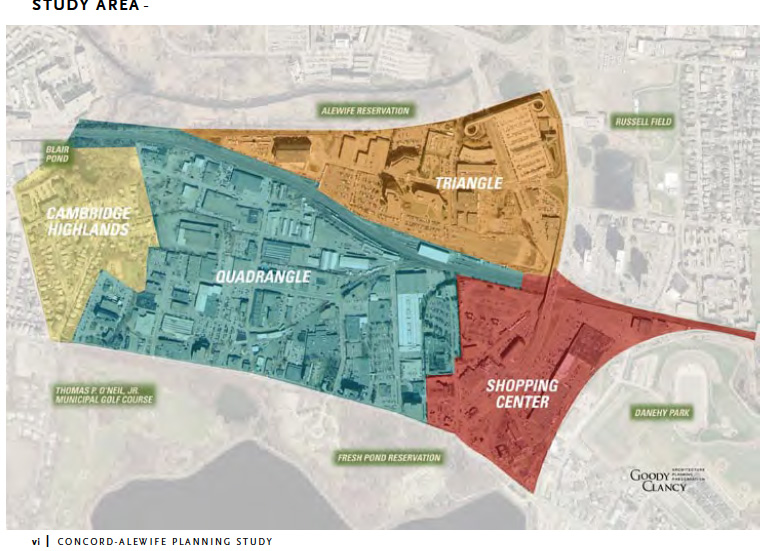
For those not well versed in the geometric jargon of the The Concord Alewife Planning Study, the Quad and the Triangle are the names given to the 190 acres lying west of Alewife Brook Parkway and bounded to the north and south by Concord Avenue and Route 2. They are contiguous but not connected by virtue of the Metro North commuter rail tracks running east-west between them.
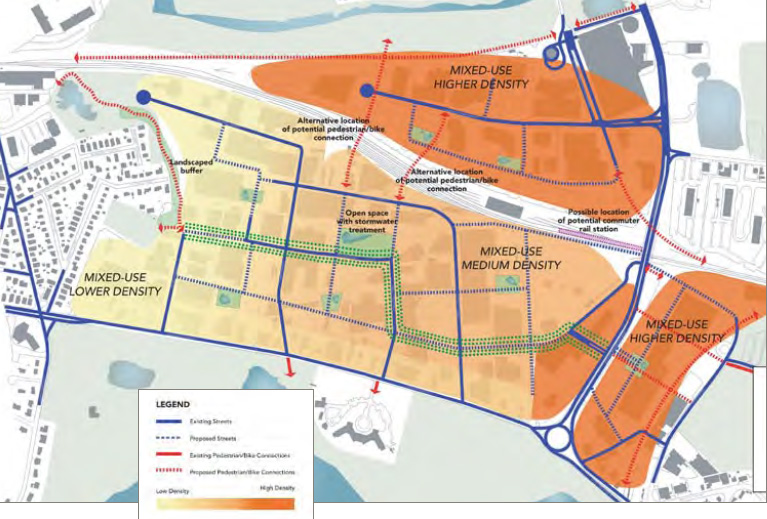
The Quad (130 acres) and the Triangle (60 acres) present both tremendous opportunities and immense challenges for future planning and development at the western frontier of Cambridge. In the past ten years, these two districts have added almost 2000 units of housing, and at least 1100 more are in the known pipeline. (Note that these numbers don’t include development immediately outside the study area, including large projects and proposals on Rindge Avenue, New Street, Bay State Road, and at the former Tokyo Restaurant site). Yet none of the new vehicle, pedestrian, or bike connections envisioned in the 2005 study has come to pass. A long talked-about pedestrian and bike bridge across the railroad tracks from (somewhere on) Fawcett Street in the Quad to (somewhere on) Cambridge Park Drive in the Triangle is finally being studied, but such a bridge is years — and several million dollars — from completion.
And no one is talking about new connections for cars and buses, even though traffic congestion along Fresh Pond Parkway through Alewife, the rotaries, and beyond is a perennial and growing source of frustration. To insist that traffic on the parkway is a regional problem that Cambridge cannot control ignores the impact that adding thousands of new residents to the Quad and Triangle is bound to have. Even if the majority of these new residents do commute by public transportation, as hoped, many of them will still use cars in their daily lives. And without new crossings, the already overburdened parkway remains the only road connecting the Quad, the Triangle, and all points beyond.
The surge in residential development in the Triangle (1000+ new units along the Cambridge Park Drive, plus hundreds more on Route 2,) is appropriately transit-centered, as the Alewife T is easily walkable from within the Triangle district. (To note, Cambridge Park Drive is a cul-de-sac and those buildings and Vox On Two share a single vehicle egress on and off Route 2.) But the massive development spree underway in the Quad cannot be justified until similar connections for pedestrians, cyclists, cars, and buses exist there, as well. Property values in both areas would most certainly increase with improved circulation, so why isn’t the City demanding that developers of these parcels help underwrite the cost of constructing new roads, multi-use paths, and railroad crossings within and between the Quad and the Triangle?
For that matter, with so much new development clustered on both sides of the commuter rail tracks, why isn’t Cambridge pushing Metro North to provide a new rail station at Alewife, similar to what is happening at Boston Landing in Brighton? Such a project would better serve both commuters transiting the Route 2 corridor and the many new local residents moving into the area.
In the end, the lack of connections reveals a failure of both vision and political will. It’s not a geometry or an engineering problem, or even a budgetary matter. No, it’s simply the Great Alewife Disconnect, and it’s a crying shame.
There’s No There There: Why We Need a Master Plan
The expression “There’s no there there” sums up the recent surge of residential development in the Alewife area. Merely adding thousands of units of housing does not make a new neighborhood if there’s no overarching vision or investment in creating a strong sense of place and community.
A master plan would help define a vision for Cambridge’s “Final Frontier,” but the city doesn’t have one, despite our Community Development Department’s insistence that a zoning map, an growth policy document, and a patchwork of area planning studies are the equivalent. Without a comprehensive master plan to guide, coordinate and balance development, Alewife has become a magnet for what a friend calls “spaceships” – giant apartment buildings that have landed on formerly industrial streets. Spaceship buildings are inward-facing, self-contained housing pods that contribute little to the public domain.
“The best urban places are made up of people doing very different things.”
-Tim Love, President, Boston Society of Architects
Spaceship buildings don’t create an urban community because this type of single-purpose development doesn’t give residents the opportunity to do “very different things” near where they live. Since 2004, we have added over 2.4 million square feet of housing in the Alewife/Fresh Pond area, almost three times the amount of new retail and commercial space combined during the same period. This is almost twice the amount of residential development that the Concord Alewife Planning study projected would be built by 2024.
Yet there are no new town squares with stores, restaurants and services, no new community centers, schools or churches, no new playgrounds or parks. There are the all-important “third places” that neighborhoods need to survive and thrive (the first and second places are homes and offices). There is no master plan to say where such community-building amenities are most needed and where they should be located, and no financial incentive for anyone to build them. The profit is in building housing, specifically small luxury units in developments that maximize the density allowed by up-zoning and special permits, which incentivize the conversion of formerly industrial sites to residential use. That part of the 2005 Concord Alewife planning study is working quite well, thank you. The rest, not so much.
So, what we are left with is spaceships – plus another City Council meeting on Monday, April 28, when the debate will continue about whether we need a master plan and, if so, which city officials (the Council or the CDD) should lead the initiative.
Expect more spaceships because, so far, no one is pressing for limits on up-zoning and special permits during the two to three years it could take until we have a master plan in hand.
Recent articles on the master plan debate and Alewife development:
Related Resources
The Concord Alewife Planning Study
Support the Carlone-Mazen-Simmons Master Plan Order
Dennis Carlone’s petition for a new master plan is the basis for a very important policy order, co-sponsored by Councillors Nadeem Mazen and Denise Simmons, on the agenda for the City Council meeting on Monday, April 7 at 5:30 pm.
Read full text of the Carlone policy order here.
We support the Carlone-Mazen-Simmons policy order over another planning-related policy order sponsored by Mayor David Maher, Vice Mayor Dennis Benzan and Councillor Marc McGovern.
The two policy orders come in response to growing public concern about the impact that the recent surge in development is having on traffic congestion, housing affordability, social equity, pedestrian/bike safety, the environment and open space – to name a few. While both policy orders recognize that residents citywide are demanding – and deserve – a greater voice in the planning process, we believe that the Carlone-Mazen-Simmons order goes further toward ensuring a more democratic and comprehensive process because it places our elected City Council at the helm, rather than appointed staff.
In our opinion, the competing policy order would more likely sustain the unsustainable status quo that has residents in the Fresh Pond area and across the city up in arms. Quite frankly, we don’t think that we could have filled the Tobin cafeteria at our first meeting on March 24 if the status quo was giving residents a meaningful say in the planning process. Monday night’s Council meeting will no doubt spark a lively debate, and a favorable outcome could be critical to the future of our neighborhood.
What you can do to help NOW
1. Contact the City Council in support of the Carlone-Mazen-Simmons master plan initiative (Policy Order #14). Send emails to council@cambridgema.gov and cc dlopez@cambridgema.gov to be entered into the public record. Or call (617) 349-4280.
2. If you have a relationship with Councillors Kelley, Cheung, or Toomey (the three who are not co-sponsoring either policy order), please contact them directly to ask that they support the Carlone order for a master plan.
ckelley@cambridgema.gov
lcheung@cambidgema.gov
ttoomey@cambridgema.gov
and/or
3. Attend Monday’s Council meeting and speak in support of the Carlone-Mazen-Simmons master plan initiative. Call (617) 349-4280 after 8:30 am on Monday to sign up to speak, and/or sign in when you arrive at City Hall (by 5:30 pm) to add your name on the public testimony list. You will be given three minutes to express your views.
If you can make it to City Hall on Monday at 5:30 pm, we encourage you to do so. Even if you don’t feel comfortable speaking, you can applaud other speakers to show your support, and the debate is sure to be instructive on many levels.
Need talking points for your comments?
The Cambridge Residents Alliance has developed a MENU of TALKING POINTS that you could use to frame your emails and comments to the Council.
Learn More
You are also welcome to attend the CRA meeting TODAY at 4:00 pm (Sunday 4/6) at St. Bartholomew’s Church off Prospect St. (next door to the Area 4 Youth Center). The group will be discussing the Carlone policy order and why a comprehensive master plan is so urgently needed.
Other Important Actions
75 New Street is on the Planning Board’s agenda for Tuesday, April 8, at 7:20 pm at City Hall Annex (344 Broadway). Thank you to everyone who submitted comments by email. We need folks to come and speak at the hearing, too. The 3-minute rule applies, so focus your comments on the aspect of the proposal that most concerns you.
Please forward this link to neighbors & friends. You and they can request to join our list by emailing FreshPondResidents@gmail.com.
Thank your for caring enough about the future of our neighborhood and our city to read to the end of this post.
April Fool?
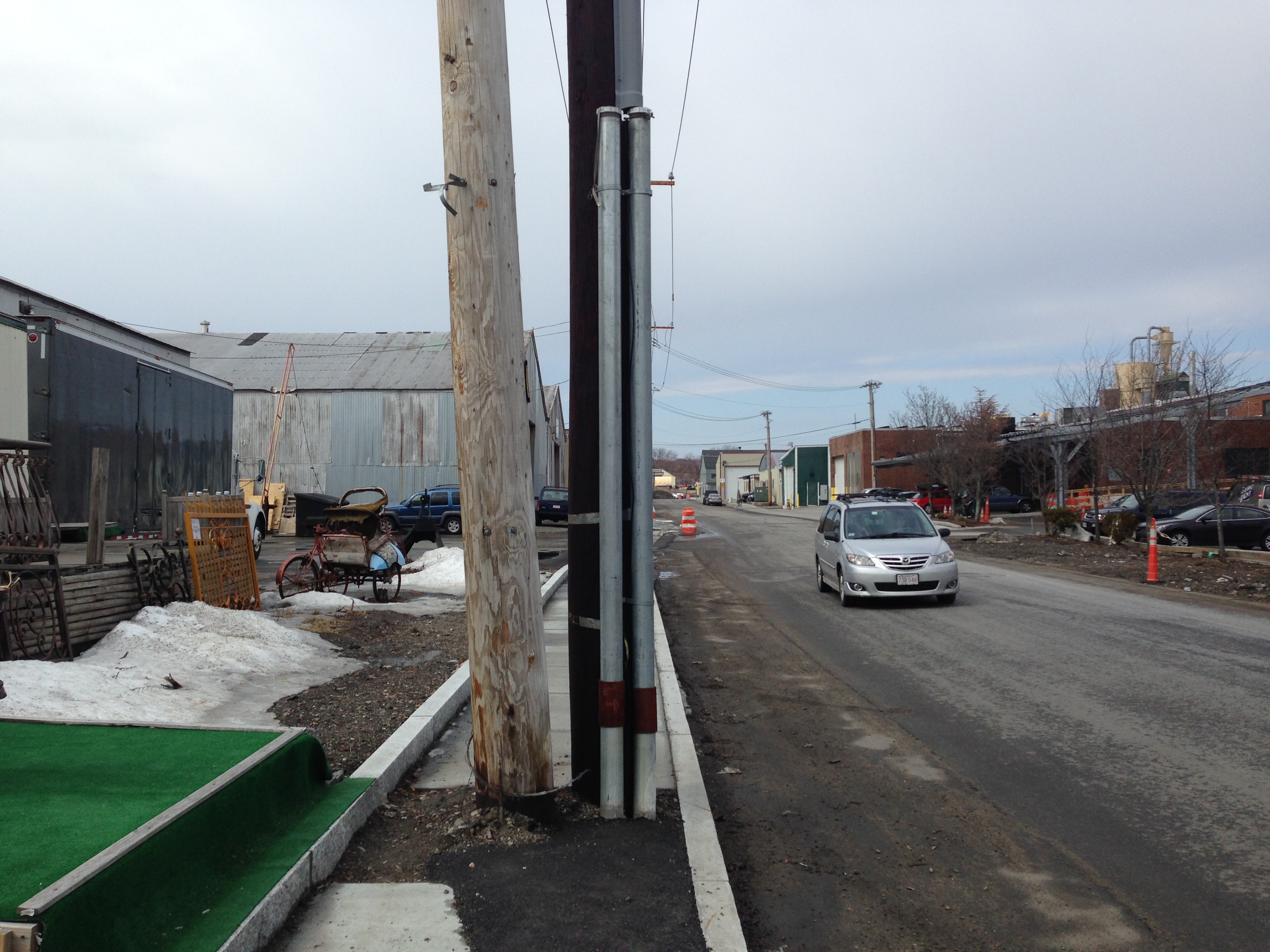
Walking along Fawcett Street from the new Atmark apartment building (429 units) to Iggy’s bakery, one notices that there are freshly poured sidewalks and new curbstones. Unfortunately these utility poles could not be moved….sigh.
Kickoff Meeting Sparks Dialogue, Spurs Push for Master Plan
About 150 Cambridge residents gathered on March 24 at the Tobin School for our group’s first meeting to share concerns about the “tsunami of development” underway in the Fresh Pond/Alewife area of Cambridge. In addition to residents from all areas of the city, attendees at our town-hall style forum included MA Rep. David Rogers and Cambridge City Councillors Dennis Carlone and Marc McGovern, and Carlone aide Mike Connolly. Also present were School Committee member Patty Nolan, former Councillor Minka von Beuzekom, and staff aides to MA Rep. Jon Hecht and Cambridge Mayor David Maher.
Our kickoff event raised awareness about the surge of recent development in the Alewife/ North Cambridge area – over 2,500 residential units constructed or in the pipeline since 2010 – and prompted a vigorous discussion about the impact on the surrounding neighborhoods and the environment. Many attendees were unaware of the 2006 zoning changes that unleashed this “gold rush,” and were shocked by the scale and density of growth around the area (see slide presentation from meeting). Continue reading
LegoLand at Fresh Pond
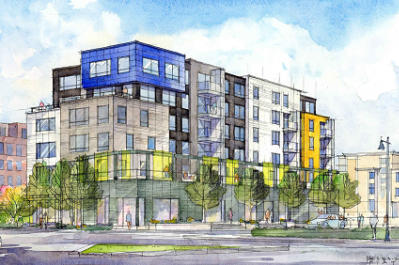
You don’t have to truck all the way over to Somerville’s Assembly Square Mall to visit a LegoLand — we’ve got one right here on Concord Avenue at Wheeler Street, where a 6-story building is going up, lego-style, with factory-made modular components. Continue reading
In Solidarity with our Neighbors in East Cambridge
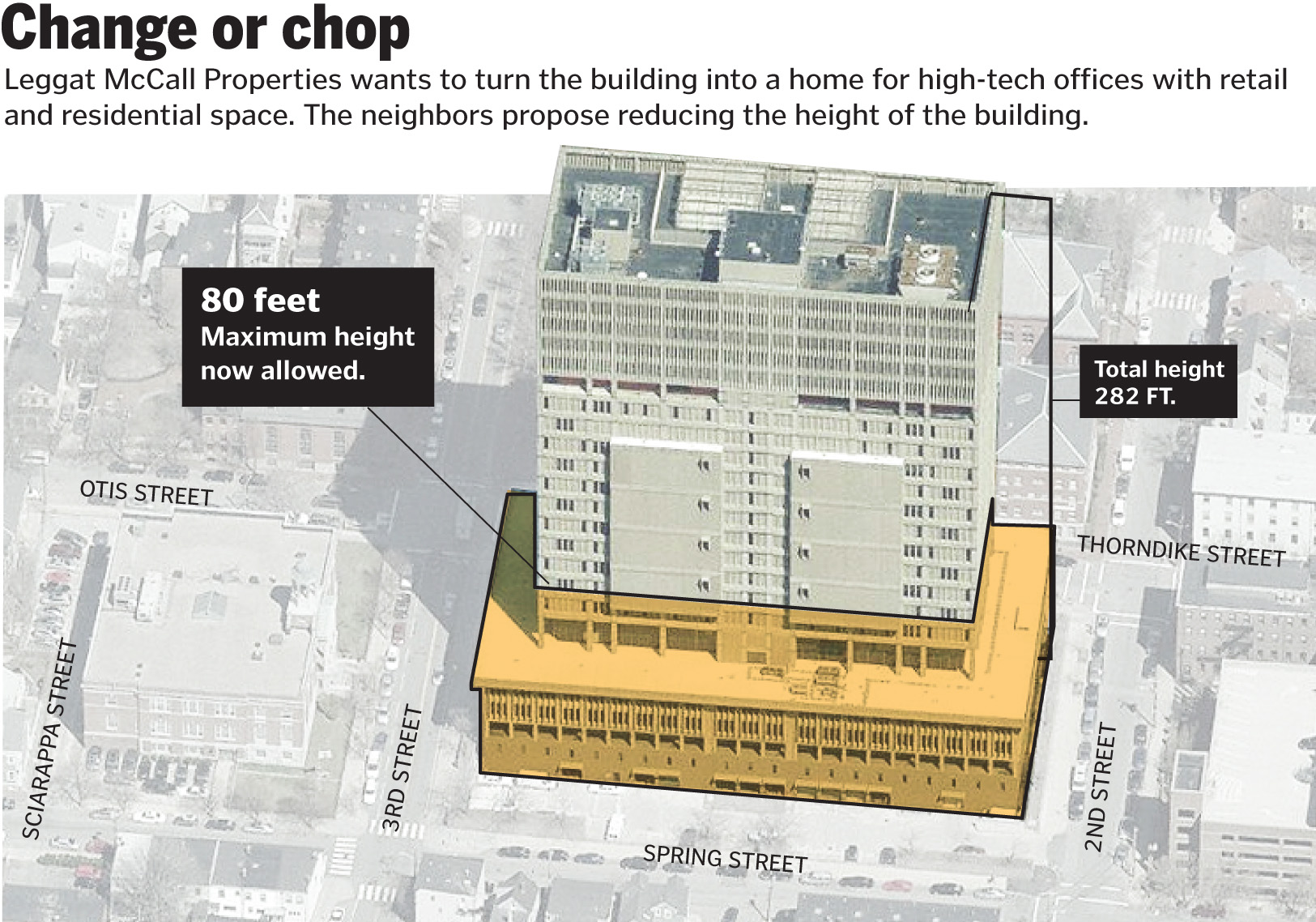
East Cambridge is at the opposite end of town from Fresh Pond (yet only 4 miles away), but the future of the Sullivan Courthouse should concern residents of all neighborhoods — as should the future of Concord-Alewife area. Neighborhoods are not islands, though we may actually become islands if over-development along the Mystic River floodway continues unchecked. We are all connected. We are all stakeholders in the planning process. We must overcome our natural tendency to pay attention only when the threat is in our own backyard. Continue reading